


Sudan today is not only under military attack. It is under digital, financial, and humanitarian siege—a quiet, systemic suffocation that operates behind the language of “sanctions,” “compliance,” and “platform policies.” What Sudanese people are experiencing is not accidental bureaucracy or collateral damage. It is shadow banning at scale, exercised through financial systems, humanitarian funding mechanisms, and social-media algorithms—while millions of civilians endure one of the worst humanitarian catastrophes of the 21st century.
This is not neutrality. This is not law enforcement.
This is modern neocolonial warfare.


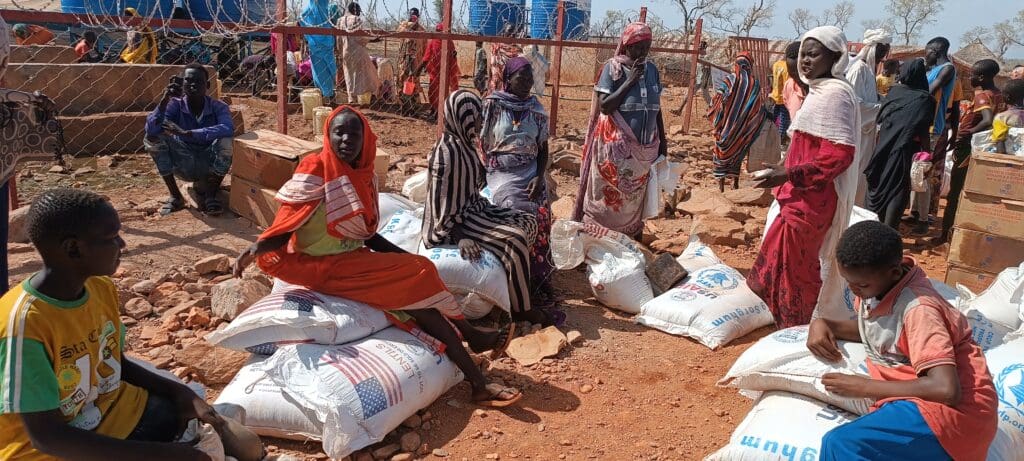
1. Sanctions That Punish the Victims, Not the Criminals
Under the pretext of international financial sanctions, ordinary Sudanese people are collectively punished:
- Families cannot receive emergency donations
- Grassroots humanitarian initiatives are blocked or frozen
- Community kitchens struggle to raise a few thousand dollars
- Medical aid campaigns are delayed or shut down entirely
Meanwhile, armed groups, war profiteers, and external sponsors operate through informal channels, offshore structures, and protected corridors—largely untouched.
Sanctions were sold to the world as tools to stop atrocities.
In Sudan, they have become tools to deepen suffering.
The result is a cruel paradox:
Those with weapons and foreign backing move freely; those with empty hands are trapped.
2. The Financial Shadow Ban: When Aid Becomes “High Risk”
Sudanese fundraisers face a pattern that is now impossible to ignore:
- Donation platforms pause or freeze transfers
- Payment processors demand endless “verification”
- Fundraisers are flagged as “high-risk geography”
- Banks quietly close accounts or reject transfers
All while stating: “Your fundraiser can still receive donations.”
This is performative permission without functionality. A mirage of access.
For communities facing famine, displacement, and mass killings, delay equals death.
A paused transfer is not a technical issue—it is a life-threatening decision.
What we are witnessing is the financial shadow banning of an entire people.
3. Algorithmic Silence: Sudan Erased from the Digital Public Square
The same pattern repeats on social media.
Sudan-related content consistently experiences:
- Reduced reach and suppressed visibility
- Demonitization or removal of fundraising links
- Flagging under vague “sensitive content” policies
- Algorithmic deprioritization in feeds and search
While wars elsewhere dominate timelines, Sudan disappears.
No trending hashtags.
No viral outrage.
No sustained attention.
This is not because Sudan lacks stories.
It is because algorithms decide whose suffering is marketable, geopolitically convenient, or advertiser-safe.
Silence, here, is engineered.
4. Humanitarian Organizations: Absent, Selective, or Politicized
Despite repeated declarations of concern, real assistance remains painfully inadequate:
- Emergency appeals are underfunded
- Access to affected areas is limited or negotiated away
- Local Sudanese initiatives are sidelined or distrusted
- Aid is filtered through political calculations
Sudan has become a crisis that is acknowledged rhetorically but abandoned operationally.
Humanitarianism, once a moral imperative, is now conditional—shaped by alliances, donors, and geopolitical convenience.
5. Sanctions + Silence = A Weaponized System
When you combine:
- Financial sanctions
- Donation platform restrictions
- Banking exclusions
- Algorithmic suppression
- Weak humanitarian response
You do not get accountability.
You get collective punishment.
This system does not stop war.
It manages suffering.
It ensures that Sudan bleeds quietly, without disrupting global markets, political narratives, or media cycles.
That is not an accident.
That is design.
6. The New Colonization: Control Without Occupation
This is what 21st-century neocolonialism looks like:
- No soldiers on the ground
- No flags raised
- No formal occupation
Instead:
- Financial chokeholds
- Digital invisibility
- Legal and bureaucratic barriers
- Proxy forces and external backers
Sudan is being controlled, weakened, and fragmented without formal conquest—while its people are denied the tools to survive, speak, and organize.
7. A Moral Question to the World
If sanctions are truly about protecting civilians,
why are civilians the ones suffocating?
If platforms claim neutrality,
why is Sudan systematically silenced?
If humanitarian principles are universal,
why is Sudan treated as expendable?
History will not judge this period kindly.
Silence is not neutrality.
Bureaucracy is not innocence.
Algorithms are not apolitical.
8. Conclusion: Breaking the Shadow Ban
Sudan does not need pity.
It needs visibility, access, and justice.
Breaking this shadow ban requires:
- Challenging discriminatory financial controls
- Amplifying Sudanese voices relentlessly
- Supporting grassroots, local aid initiatives
- Exposing how “compliance” is weaponized
- Refusing to let Sudan vanish from the global conscience
This is not just a Sudanese struggle.
It is a warning.
When systems can silently erase one people,
they can erase anyone.
Sudan is not invisible.
Sudan is being made invisible.

